
Clinical Executive Summary: Understanding pediatric airway orthodontics mouth breathing challenges in growing children reveals how airway obstruction alters the biomechanical equilibrium between the tongue, cheeks, and jaws, leading to a condition known clinically as “adenoid facies” or Long Face Syndrome. When nasal breathing is obstructed—due to hypertrophic adenoids, allergic rhinitis, or an untreated ankyloglossia (tongue-tie)—the tongue drops from the roof of the mouth to the oral floor. Deprived of the natural widening force of the tongue, the upper jaw develops into a narrow, high-arched V-shaped palate, causing severe dental crowding, retrognathic jaw growth, and pediatric sleep-disordered breathing. Early interceptive airway orthodontics and myofunctional therapy can permanently correct this trajectory between ages 5 and 12.

Why Pediatric Airway Orthodontics Mouth Breathing Solutions Are Vital Early
Form follows function in human biology. During early childhood development, nasal breathing is essential for the natural horizontal expansion of the midface:
- The Tongue Acts as an Internal Palatal Expander: During nasal breathing, the dorsal surface of the tongue rests firmly against the hard palate, exerting gentle outward hydraulic pressure against the maxilla over 1,000 times a day during swallowing.
- Buccal Muscular Balance: Outward tongue pressure counterbalances the inward squeezing pressure of cheek buccinator muscles.
- Nasal Cavity Widening: Because the roof of the mouth forms the floor of the nasal cavity, an expanding palate naturally broadens the nasal airway.
The Physical Hallmarks of “Adenoid Facies” (Long Face Syndrome)
- Elongated Facial Height: The lower third of the face grows excessively downward and backward, resulting in a receded, weak chin.
- Dark Eye Circles (“Allergic Shiners”): Restricted nasal airflow impedes venous blood drainage from facial veins.
- Venous Lip Incompetence: Upper lip appears short and parted, leaving front teeth permanently exposed at rest.
- Narrow, High-Arched Palate: The arch collapses into a sharp “V” shape, leaving insufficient room for permanent teeth.
- Forward Head Posture: Children thrust heads forward to open a constricted pharyngeal airway, altering spinal posture.
Interceptive Treatment: Airway Orthodontics & Laser Frenectomy
| Clinical Intervention | Mechanism of Action | Ideal Age Window |
|---|---|---|
| Rapid Maxillary Expansion (RPE / Hyrax) | Gently separates mid-palatal suture to widen upper jaw by 0.25 mm/day, broadening nasal airway | Ages 6 to 11 (before suture ossification) |
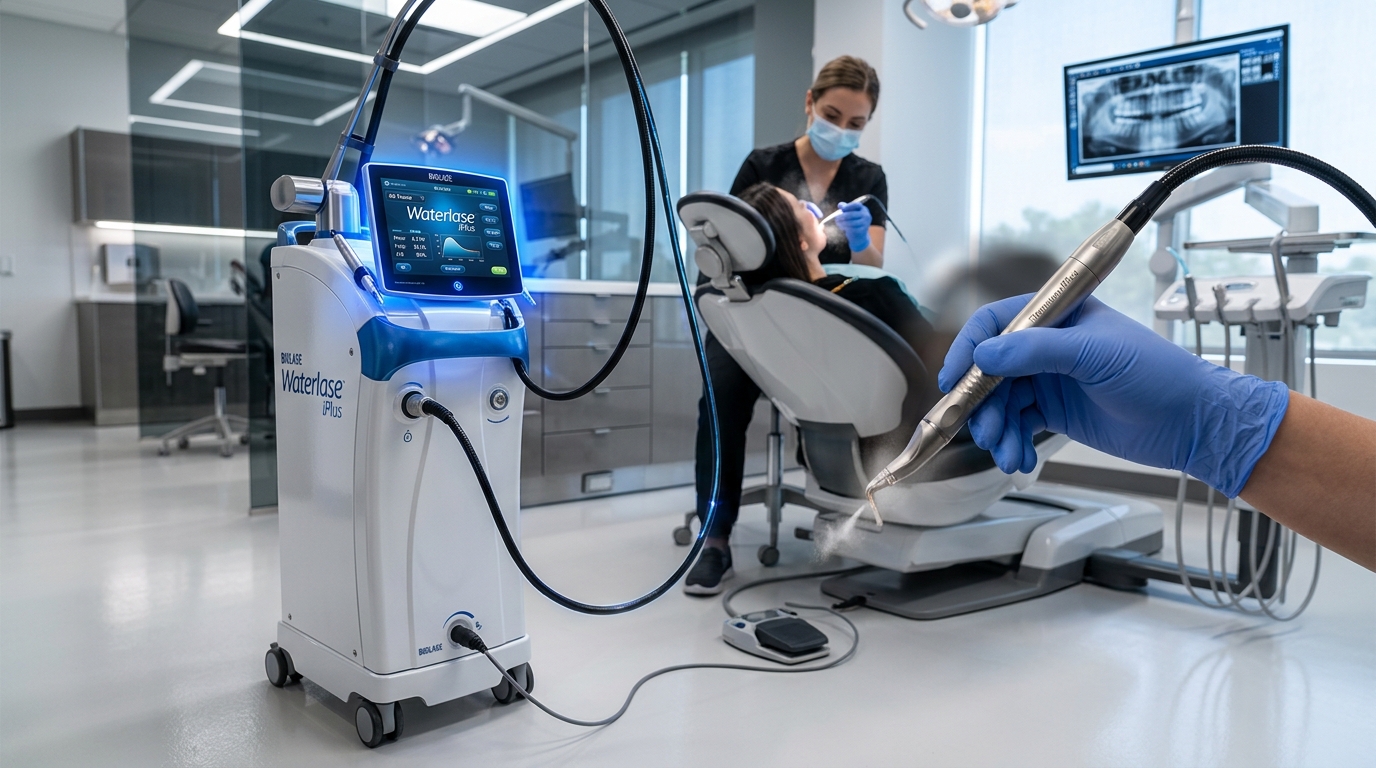
| Laser Tongue-Tie Release (Biolase) | Painless laser release of restrictive tissue to enable full lingual elevation | Infancy to 12 years |
| Myofunctional Therapy | Neuromuscular oral exercises to retrain lip seal, nasal breathing, and correct swallowing | Ages 5 to 14+ |
| Clear Airway Orthodontics (Invisalign First) | Digital aligners designed for mixed dentition to expand dental arches | Ages 6 to 10 |
Parental Airway Screening Checklist
Does Your Child Show Any of These 5 Signs?
- ☑ Sleeps with Mouth Open: Lips parted during naps or nighttime sleep.
- ☑ Audible Breathing or Snoring: Heavy breathing sounds or snoring at night.
- ☑ Night Grinding (Bruxism): Loud teeth grinding sounds during sleep.
- ☑ Restless Sleep & Morning Fatigue: Wakes up irritable, tired, or struggling to concentrate in school.
- ☑ Dark Eye Circles: Persistent blue/dark circles despite adequate sleep hours.
Any single symptom warrants an early interceptive airway evaluation.
Frequently Asked Questions (FAQ)
Does a laser tongue-tie release hurt?
No. Performed using a gentle soft-tissue dental laser under topical numbing, the procedure seals nerve endings and blood vessels instantaneously, eliminating stitches, bleeding, and pain.
Why shouldn’t we just wait until all permanent teeth erupt at age 13?
Waiting until age 13 means the critical window of mid-facial skeletal growth has passed. Correcting a narrow palate early (ages 6–9) guides healthy facial bone development, eliminates the need for adult premolar extractions, and expands the nasal airway for life.
Book a Pediatric Airway Consultation
Consult Dr. Kritika Kanwar Butta and our pediatric airway team:
- Kolkata Flagship: 204, Acharya Jagadish Chandra Bose Rd, Park Street Area, Kolkata 700017
- Mumbai Centre: 2nd Floor, 393 Linking Rd, Khar West, Mumbai 400052
- Helpline / WhatsApp: +91 90733 36669
- Email: info@dentalworldindia.com
To review clinical findings on pharyngeal dimensions, see the Sleep Medicine Reviews study on pediatric airway orthodontics. Explore our specialized Pediatric & Myofunctional Center for complete growth guidance.