
Clinical Executive Summary: Comparing zirconia crowns Kolkata Mumbai clinics offer requires balancing mechanical flexural strength against optical translucency requires balancing mechanical flexural strength against optical translucency. Monolithic 3Y and 4Y zirconia crowns deliver extraordinary fracture resistance ranging from 900 to 1,200 MPa, making them the premier choice for posterior molars subjected to high masticatory bite forces and heavy bruxism. In contrast, Lithium Disilicate glass-ceramics offer exceptional light transmission and opalescence with 450 to 500 MPa strength, making them the aesthetic gold standard for anterior front teeth. With modern multi-layered 5Y high-translucency zirconia, clinicians can now achieve both remarkable strength and lifelike aesthetics without dark metal borders.
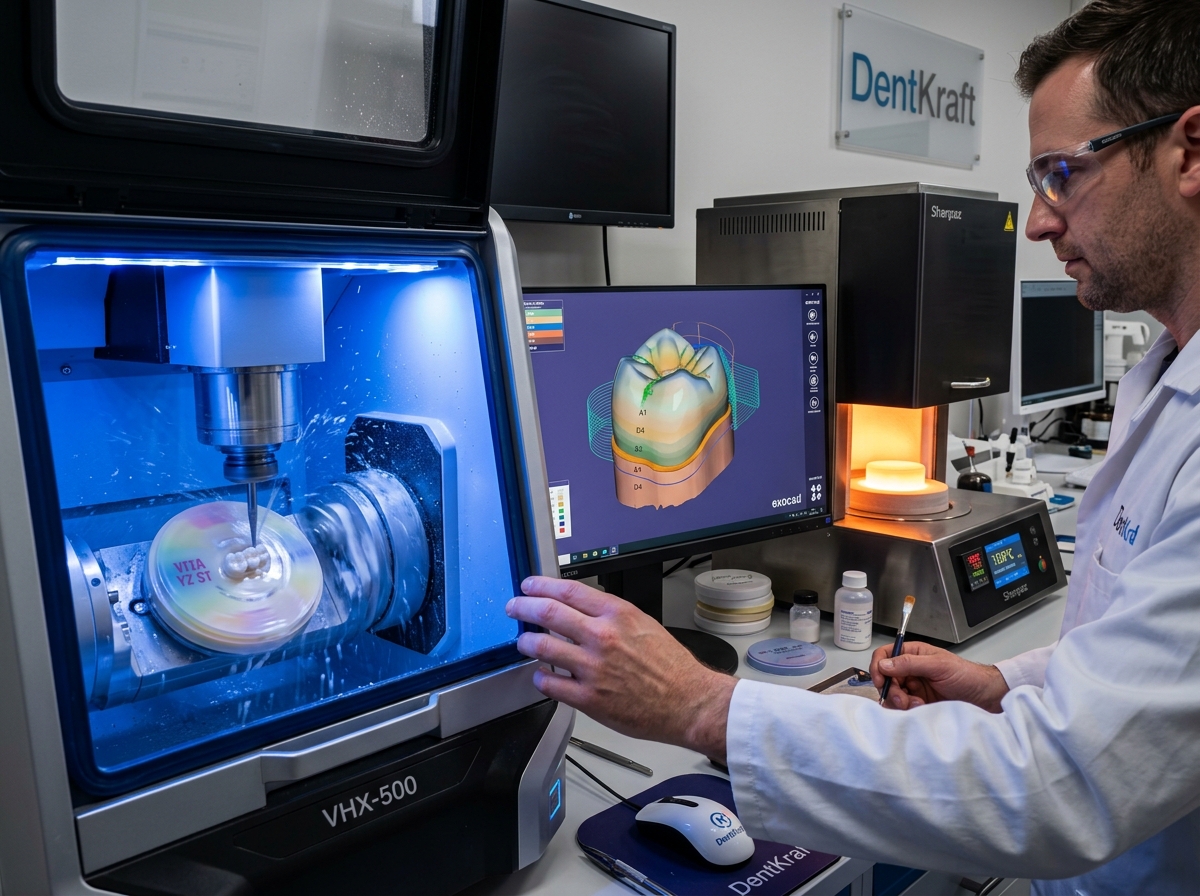
Evaluating zirconia crowns Kolkata Mumbai vs Ceramic Crown Longevity
Porcelain-fused-to-metal crowns suffer from three major shortcomings: unsightly black lines as gums mature, brittle porcelain chipping under heavy loads, and chalky opaque coloration. Modern dentistry has transitioned entirely to biocompatible, 100% metal-free ceramics.
Material Science: Zirconia vs. Lithium Disilicate
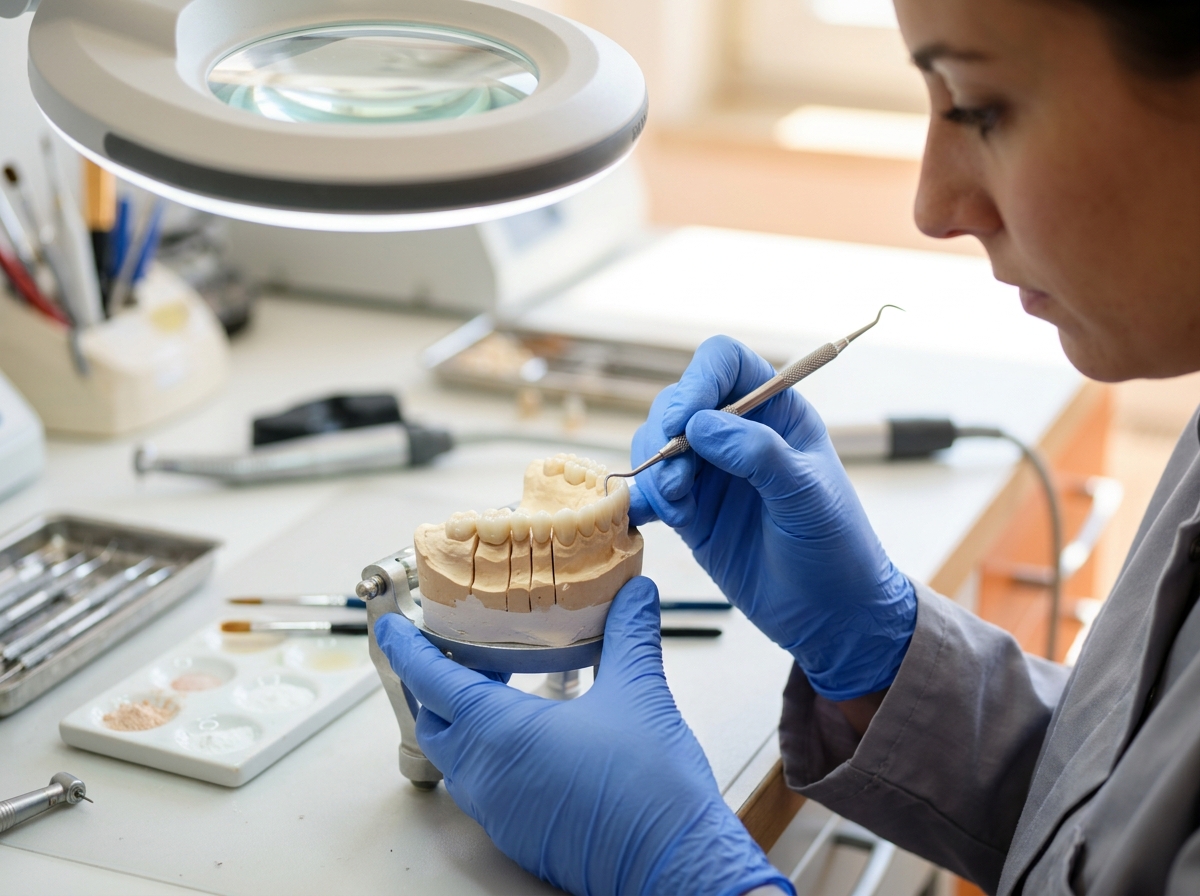
- Monolithic Zirconia (3Y/4Y/5Y): Polycrystalline dioxide of zirconium stabilized with yttria. Features “transformation toughening” that physically arrests micro-crack propagation, yielding 900–1,200 MPa flexural strength. Ideal for molars and bridges.
- Lithium Disilicate (IPS e.max): Glass-ceramic matrix with needle-like crystals replicating natural enamel’s refractive index (1.62). Delivers 450–500 MPa strength with unrivaled optical warmth and incisal translucency. Ideal for front teeth and veneers.
Detailed Performance Comparison
| Performance Parameter | Monolithic Zirconia Crown | Lithium Disilicate (IPS e.max) | Traditional PFM (Metal-Ceramic) |
|---|---|---|---|
| Flexural Strength | 900 – 1,200 MPa | 450 – 500 MPa | 100–120 MPa (porcelain layer) |
| Aesthetic Translucency | High in 5Y; moderate in 3Y | Exceptional (Natural enamel match) | Poor (Dark metal core) |
| Chipping Risk | 0% (monolithic) | Very low | High (20% chip in 5–7 yrs) |
| Sub-gingival Margins | Natural tooth-colored border | Invisible seamless blend | Frequent black/gray line |
| Marginal Seal Precision | Sub-20 Microns: Airtight fit prevents secondary root decay | Sub-20 Microns: Hermetic adhesive bond | 50–100 Microns; prone to cement washout |
| Biocompatibility Index | 100% Bio-inert; zero gum inflammation | 100% Bio-inert; healthy tissue attachment | Moderate; risk of base-metal allergies and staining |
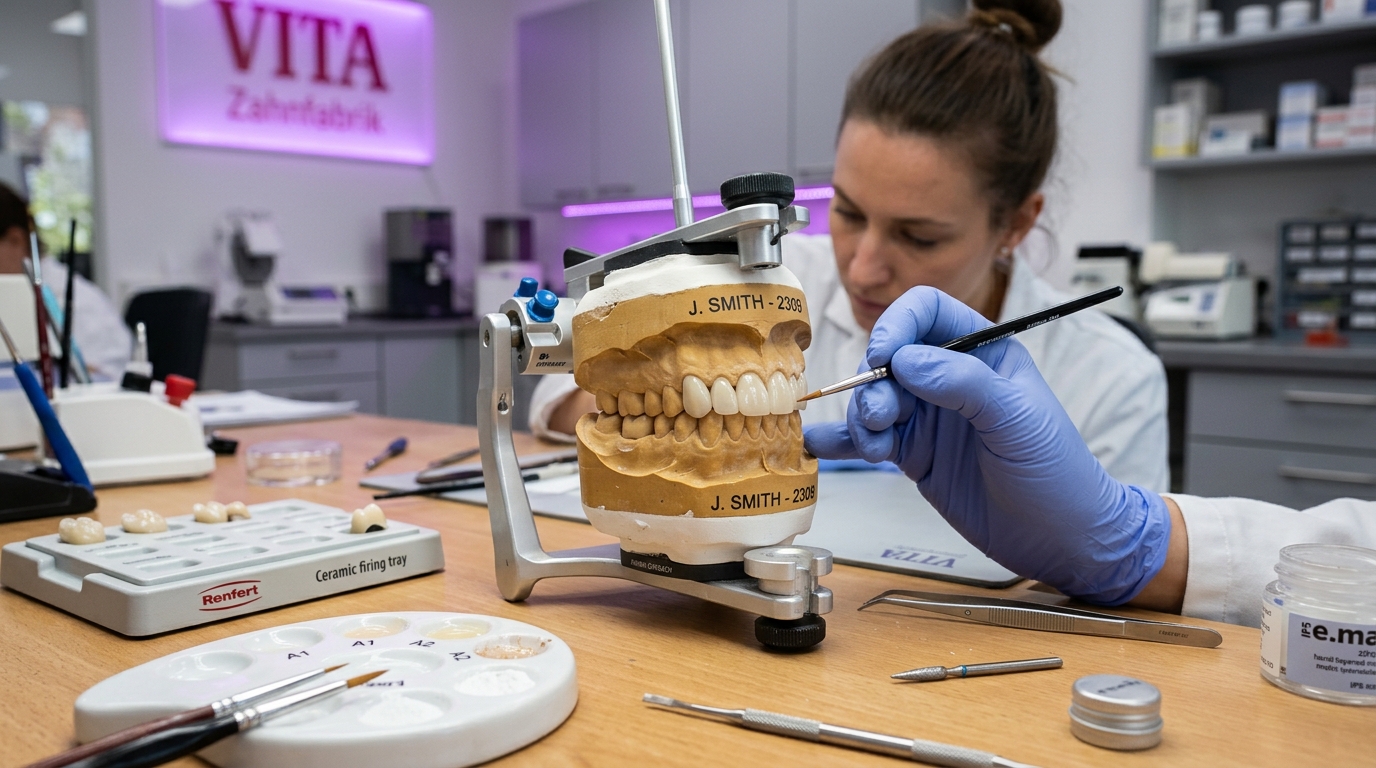
“A crown should feel invisible in the mouth—strong enough to chew almonds without worry, yet seamless enough that even a dentist cannot tell it apart from adjacent natural teeth.”
— Dental World Prosthodontic Council
Material Selection Guide: Which Crown Belongs Where?
Crown Selection at a Glance:
- 🦷 Back Molars & Chewing Teeth: Choose Monolithic Zirconia (maximum 1,200 MPa strength; zero chipping risk under heavy chewing).
- 🦷 Front Smiling Teeth: Choose IPS e.max Lithium Disilicate (unrivaled lifelike translucency and natural light transmission).
- 🦷 Bruxism / Grinders: Choose Polished Monolithic Zirconia (smoother than enamel; prevents wear on opposing teeth).
Frequently Asked Questions (FAQ)
Will a zirconia crown wear down my opposing natural teeth?
No. Highly polished monolithic zirconia is smoother than natural enamel, causing less friction wear on opposing teeth than traditional porcelain.
How long does a zirconia crown last?
Zirconia crowns are designed to last 15 to 25+ years or a lifetime with proper oral hygiene and routine dental checkups.
Upgrade to Metal-Free Zirconia at Dental World
Eliminate dark metal lines with custom CAD/CAM crowns:
- Kolkata Flagship: 204, Acharya Jagadish Chandra Bose Rd, Park Street Area, Kolkata 700017
- Mumbai Centre: 2nd Floor, 393 Linking Rd, Khar West, Mumbai 400052
- Helpline / WhatsApp: +91 90733 36669
- Email: info@dentalworldindia.com
Discover how crowns are engineered in our proprietary DentKraft CAD/CAM Lab.